
Bacteriostatic Water and Reconstitution: A Research Handling Primer
A plain-English guide to what bacteriostatic water is, why it is the standard solvent for reconstituting freeze dried research peptides, and how the basic concentration maths works. Strictly research handling information, no use guidance.
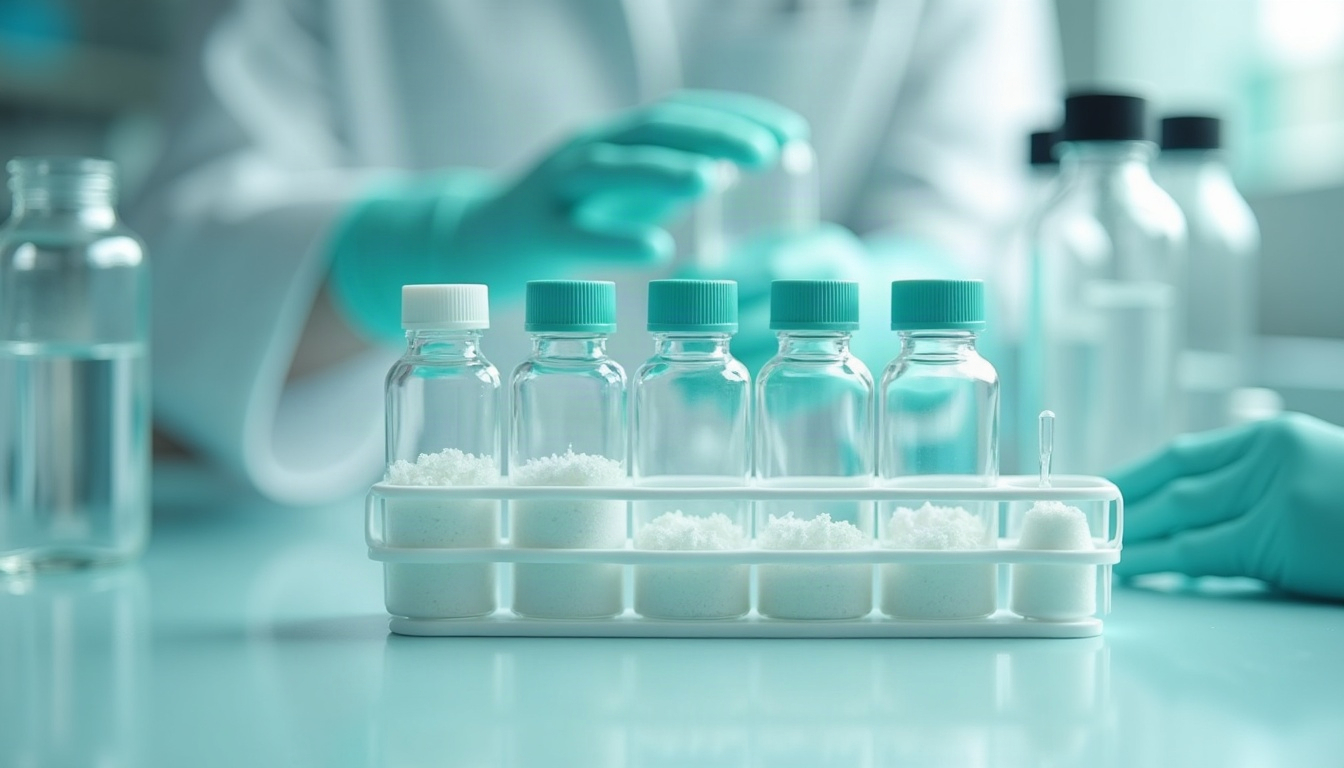
The bottle next to the vial
If you work with research peptides, you have almost certainly seen bacteriostatic water listed alongside the lyophilised powder. It is one of the most common items in a research fridge, yet it is often the least understood. This primer explains what it actually is, the role it plays in reconstitution, and the simple arithmetic that governs concentration.
Everything below is general laboratory information for research use only. It covers the handling, sourcing and verification side of the work. It is not guidance for use in humans or animals, and nothing here should be read as a dose, an amount, or an instruction to administer anything.
What bacteriostatic water actually is
Bacteriostatic water is sterile water for injection that contains a small amount of a preservative, most commonly 0.9% benzyl alcohol. The word bacteriostatic points to what that preservative does: it inhibits the growth of bacteria in the solution. It does not sterilise a contaminated vial, but it holds bacterial growth in check under normal cool storage.
This is the practical difference between bacteriostatic water and plain sterile water for injection. Sterile water has no preservative, so once its seal is broken it is generally treated as a single use item. The preservative in bacteriostatic water is what allows a reconstituted vial to be entered more than once across its research life without the solvent itself becoming a growth medium.
Why lyophilised peptides need a solvent
Research peptides are usually supplied as a lyophilised, or freeze dried, powder. Lyophilisation removes water from the frozen material under vacuum, which leaves a dry cake or fine powder that is far more stable in storage than a liquid would be. In dry form the peptide is easier to ship and keeps its integrity for longer.
Because the material is dry, it has to be brought back into solution before it can be measured or worked with. That step is called reconstitution: a measured volume of solvent is introduced into the vial so the powder dissolves into a liquid of known concentration. Bacteriostatic water is the standard solvent for this in a research setting, precisely because its preservative supports a vial that may be drawn from on more than one occasion.
The concentration relationship, as handling maths
The maths of reconstitution is simple and worth understanding as pure research arithmetic. Concentration is the mass of powder in the vial divided by the volume of solvent you add to it.
Put plainly: concentration equals milligrams of powder divided by millilitres of solvent added. If you add more solvent to the same amount of powder, the concentration goes down. If you add less, it goes up. The mass of peptide never changes when you reconstitute it, only how much liquid it is spread through.
This is why the volume you add matters for record keeping. Two researchers holding identical vials will end up with different concentrations if they add different volumes of water. Noting the exact volume added lets anyone calculate the concentration of a given vial later. This is descriptive laboratory maths only. It is not a recommendation of any amount for any purpose.
- Concentration = mg of powder ÷ mL of solvent added
- More solvent gives a lower concentration, less solvent gives a higher one
- The peptide mass is fixed by the batch, only the volume changes the result
- Always record the exact volume added so the concentration can be recalculated
General storage and handling
Lyophilised material is at its most stable while it is still dry. As a general rule, freeze dried research peptides are kept cool, dry and away from light, with the vial sealed until it is needed. Many researchers keep long term stock frozen and hold shorter term working stock refrigerated, though the right approach depends on the specific compound and its documentation.
Once a vial has been reconstituted it is a liquid, and liquids are less stable than dry powder. Reconstituted material is generally refrigerated rather than frozen, kept away from light, and handled with clean technique to avoid introducing contamination through the stopper. Wiping the vial septum before each entry and using a fresh sterile needle are basic handling habits that protect the solution.
Bacteriostatic water itself is stored the same way most sterile solutions are: cool, sealed and out of direct light, with an eye on the manufacturer's own dating on the bottle.
- Keep lyophilised powder cool, dry, dark and sealed until it is needed
- Treat reconstituted liquid as less stable: refrigerate, keep dark, handle cleanly
- Wipe the septum and use a fresh sterile needle for each entry
- Follow the manufacturer dating on the bacteriostatic water bottle
Where quality starts
Good handling only matters if the material is what the label says it is. That is why the certificate of analysis behind a batch is worth reading before anything is reconstituted. At Pepology every batch is independently tested by Novagen Laboratories, a separate third party lab, to a 98%+ purity specification, and the certificates are published to a public register anyone can verify.
Orders are dispatched same day from a Gold Coast warehouse in Australia, backed by a 100% delivery guarantee, with payment by bank transfer or crypto verified by a person before anything ships. All products are supplied strictly for research use only. If you want to see the paperwork behind a batch, the public register is the place to start.
This article is general information for research buyers. All Pepology products are supplied strictly for laboratory research use only and are not for human or animal use. Every batch is independently tested by Novagen Laboratories and verifiable on a public register.